Unified the core workflow
Connected the official card search API to card detail, Main Deck, Material Deck, and Sideboard flows, then added text import, export, and share codes.
Product engineering · Full-stack delivery
A card search, deck-building, scoring, and visual-analysis product for Grand Archive players.
Open Garater ↗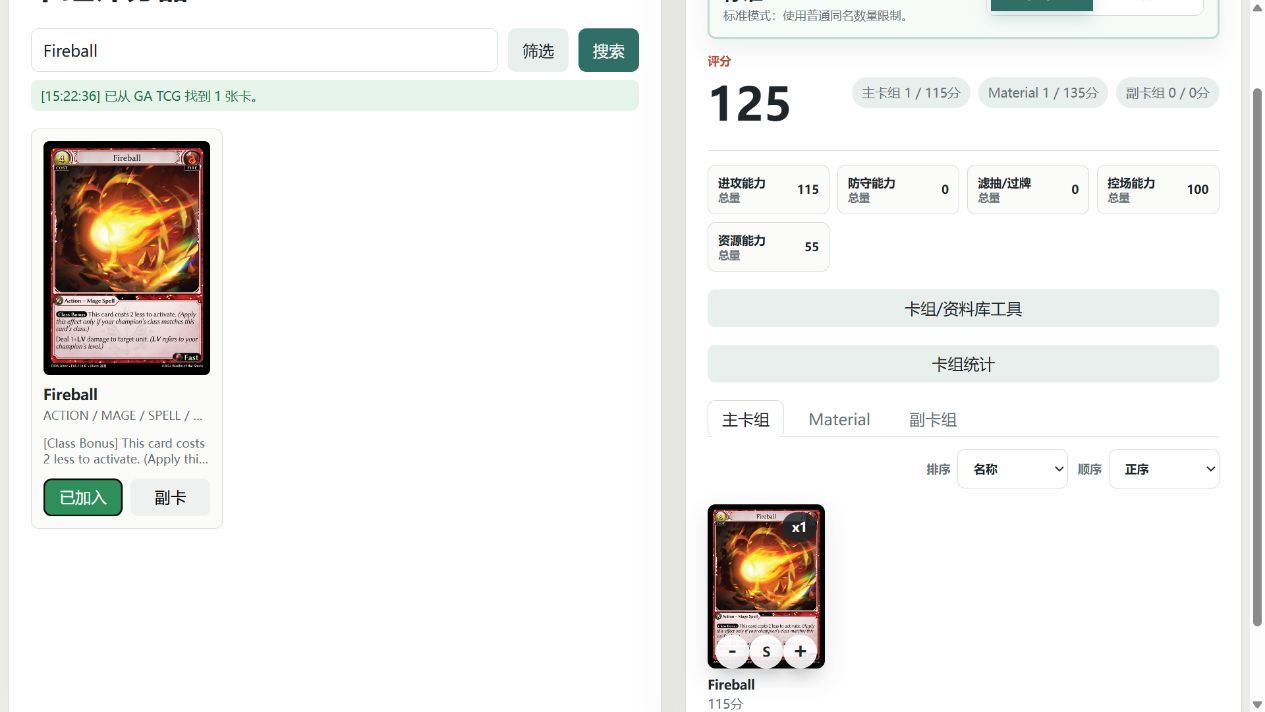
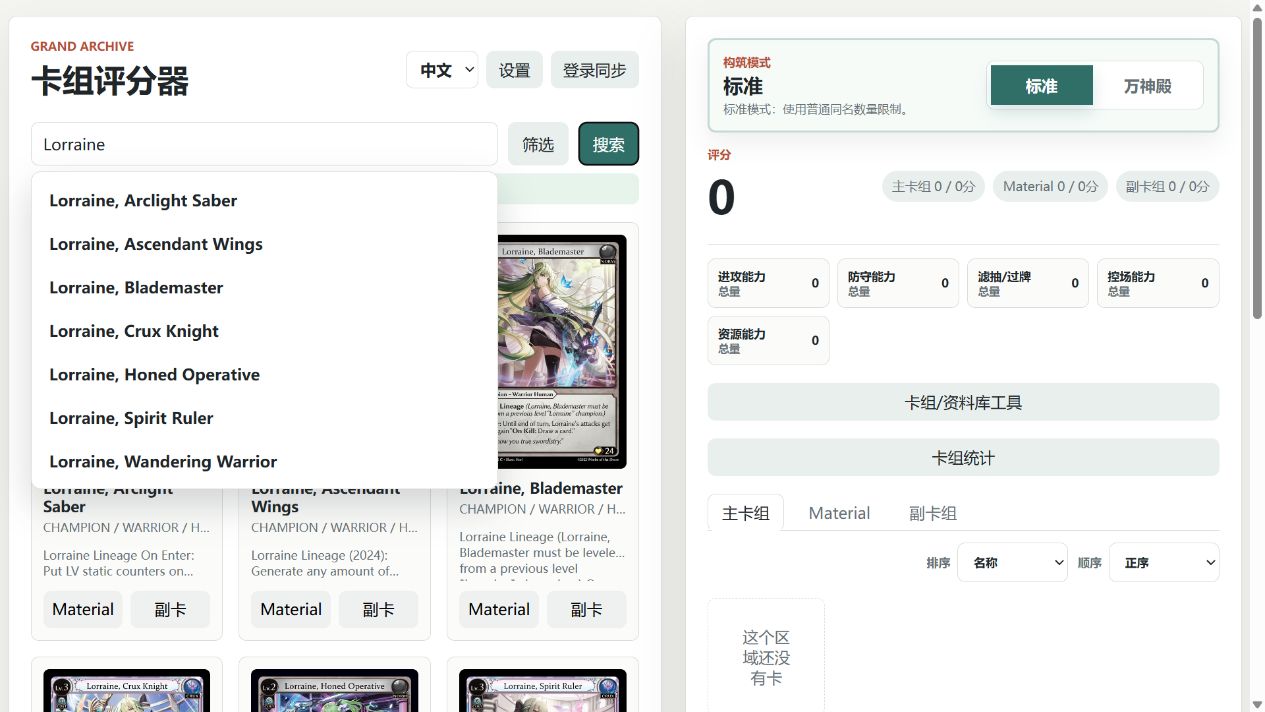
Grand Archive players had to move between card databases, deck lists, and subjective evaluation methods. The product brings official card search, deck construction, structural scoring, and analysis into one workflow.
Design and ship a useful public product quickly, while keeping it accessible without an account and leaving room for optional cloud sync.
Connected the official card search API to card detail, Main Deck, Material Deck, and Sideboard flows, then added text import, export, and share codes.
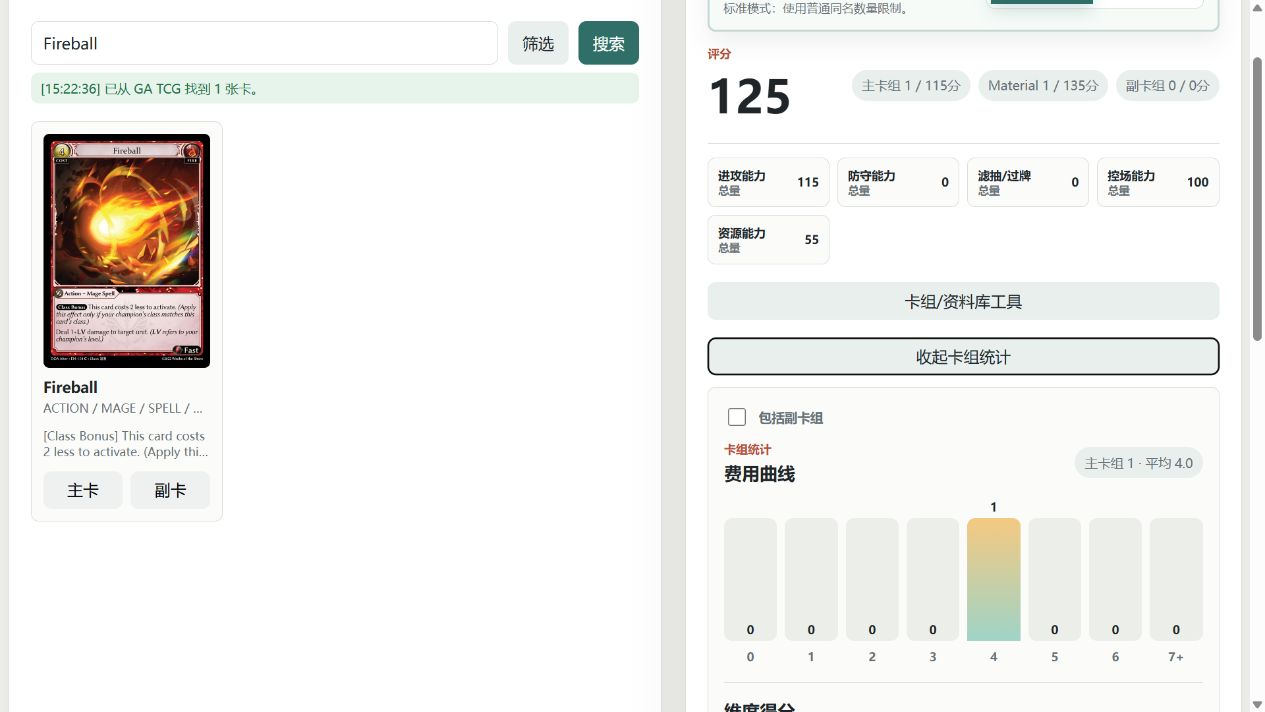
Built a five-dimension scoring system and surfaced the result through totals, contribution views, cost curves, radar charts, and tags rather than a single opaque number.
Implemented browser-local saving first, then added Cloudflare Workers, D1, sessions, and Google OAuth for optional cross-device deck sync.
Requiring an account would add friction before a player experienced value. The app therefore works anonymously; cloud accounts are an enhancement, not a gate.
If the cloud API is unavailable, local decks and share codes still work. This keeps the main deck-building workflow useful during partial service failures.
AI-assisted development accelerated implementation, while requirements, scoring logic, architecture, security boundaries, testing, and production release remained explicitly owned.
A late-August 2026 analytics snapshot showed 1.45K unique visitors over the preceding 30 days. The product grew into a bilingual, production-deployed tool with a 661-record public rating library, two construction formats, analytics, feedback paths, and optional cloud sync.
Tools & platforms